
Build Your Brand: Why Live Commerce is King in India

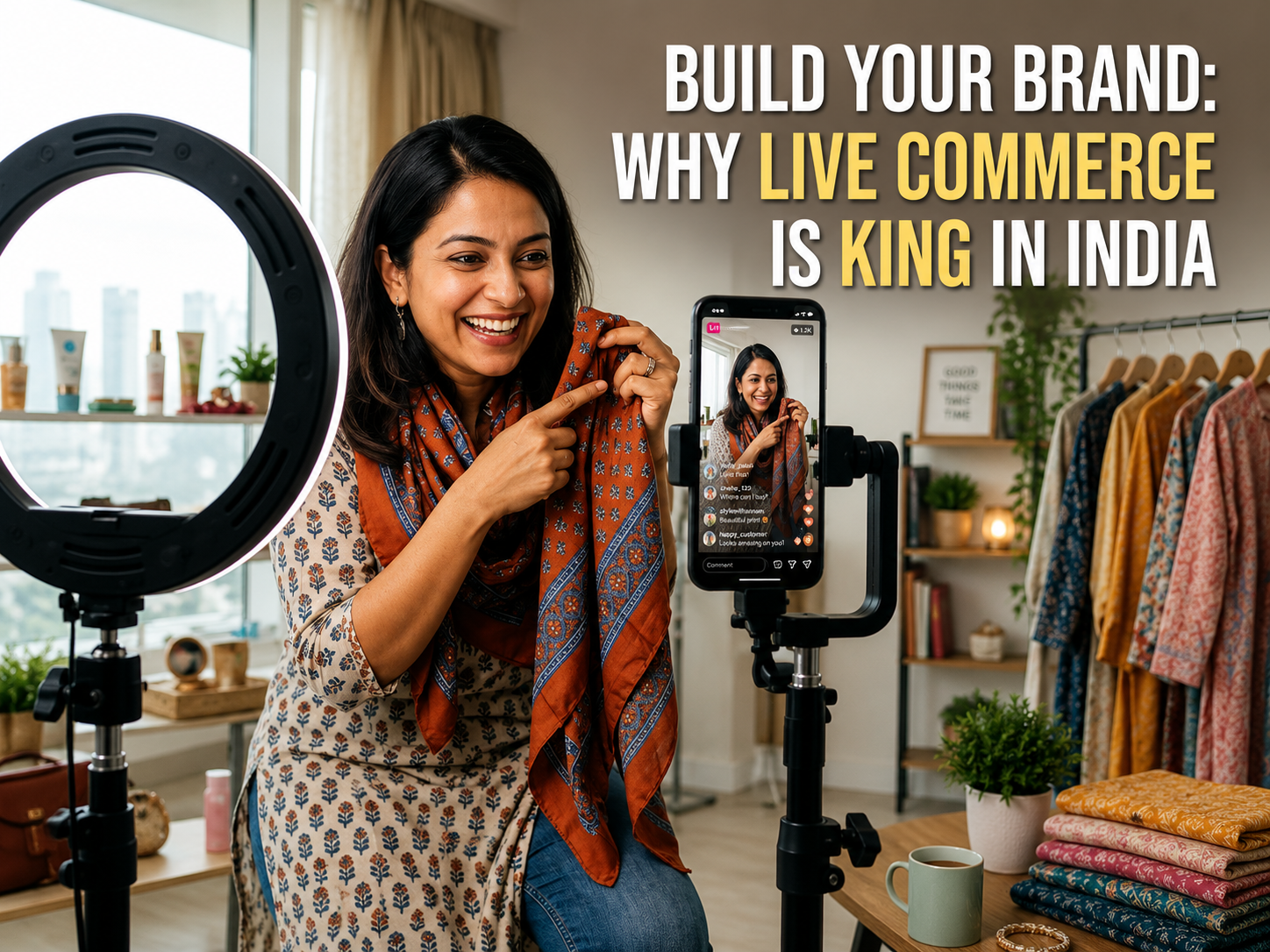
Traditional Indian e-commerce is facing a massive shift because static product photos and text descriptions no longer satisfy the modern shopper.
Indian consumers are moving away from the "search and click" model toward a "watch and buy" experience. This transition is driven by a deep-seated cultural need for trust, interaction, and real-time validation before making a purchase.
Why is Live Commerce the dominant force in the Indian Market?
The primary reason live commerce has become the gold standard for brand building in India is the immediate collapse of the trust barrier. In a market where buyers are often wary of "Expectation vs. Reality" mishaps, seeing a live human being hold, stretch, and demonstrate a product in real-time provides instant security. Indian shoppers are naturally conversational.
They want to ask about the fabric and negotiate or inquire about discounts just as they would in a physical bazaar. Live shop-ping bridges the gap between the convenience of digital payments and the warmth of a local shopkeeper’s interaction. When you use live selling tools, you aren't just a faceless brand; you become a trusted personality.
Research indicates that over 70% of Indian online shoppers find live sessions significantly more helpful for product reviews and demonstrations than traditional ads. This interactive format doesn't just sell a product; it builds a community. By engaging directly with your audience, you transform a one-
time buyer into a loyal brand advocate.
How does Multi-streaming accelerate growth?
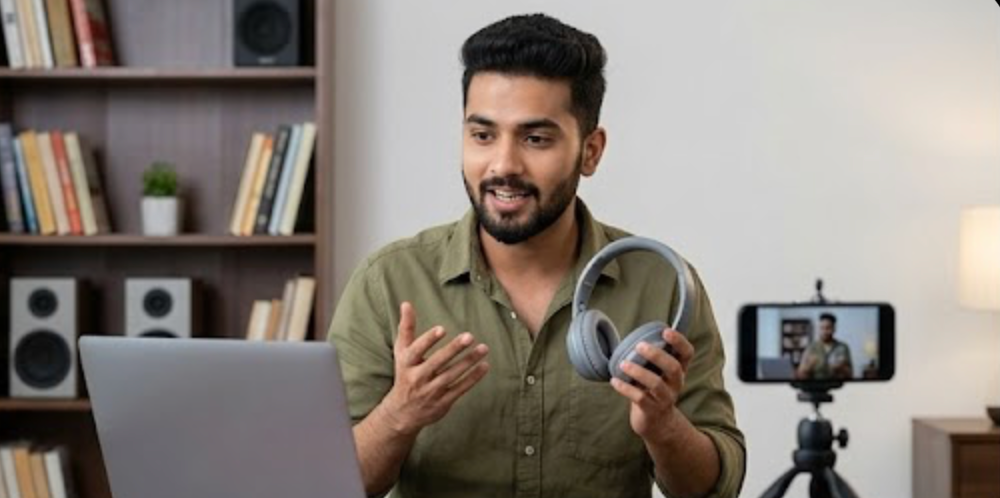
To build a massive brand in a country as diverse as India, you cannot afford to be visible on only one platform. Your customers are fragmented across different social ecosystems. Some prefer the community feel of Facebook, others the visual aesthetic of Instagram, and many use YouTube for long-form discovery.
Multistreaming allows you to reach all these segments simultaneously without increasing your workload. By choosing to live stream to multiple platforms, you ensure that your brand is present wherever your customer happens to be scrolling at that moment.
Can I stream on Facebook and YouTube Together?
You can easily stream to facebook and youtube at same time using the right live selling app. This capability is crucial for Indian sellers because it doubles or triples your potential audience instantly. While your YouTube audience might be looking for detailed tutorials or fabric deep-dives, your Facebook audience is likely engaging in community groups and sharing your stream with friends.
When you go live on Facebook and Instagram at the same time, you capture two very different demographics. Instagram attracts a younger, trend-conscious audience focused on instagram live shopping features, while Facebook remains a powerhouse for regional markets and older demo-
graphics with high purchasing power. Using a unified tool like Zoop Live simplifies this process, allowing you to manage comments and inventory from a single dashboard rather than juggling three different phones.
Why is social selling more effective than a traditional website?
Traditional websites often feel cold and transactional. In India, social selling thrives because it is rooted in relationships. A website visitor might leave your page the moment they have a doubt. In a live session, that doubt is addressed in seconds.
The "Live" factor creates a sense of urgency. When a viewer sees other people commenting "Interested" or "Booked," the fear of missing out (FOMO) kicks in. This social proof is a powerful psychological trigger that traditional E-commerce cannot replicate. Furthermore, social selling via live streams allows you to showcase the personality behind the brand, which is the most effective way to stand out in a crowded marketplace.
You need live selling tools that handle the "boring" parts of the business so you can focus on the "selling" part.
Advanced tools provide features like:
- Automatic Cataloging: Every time you show a product, the app can automatically list it in your digital shop.
- Real-time Inventory Management: No more overselling. The system tracks quantities as people claim items in the chat.
- Overlay Graphics: Display prices, SKU numbers, and "Sold Out" stickers directly on the screen to keep the stream looking clean.
- Instant Checkout: Instead of the tedious "DM for price" flow, customers can click a link and pay via UPI or cards immediately.
How to Start your Live Commerce Journey in India
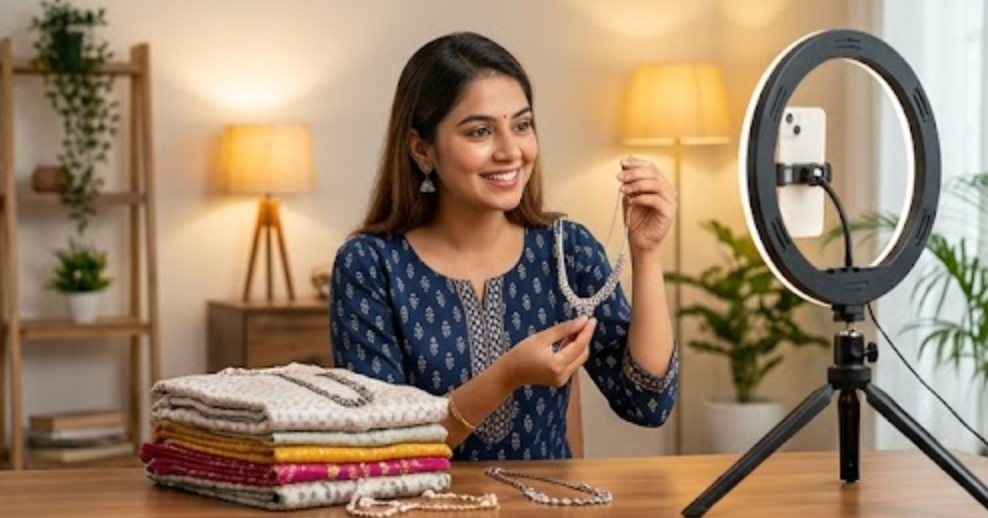
Building a brand through live selling doesn't require a massive studio or expensive cameras. It requires consistency and the right strategy.
- Choose your niche: Focus on products that benefit from demonstration, such as fashion, jewelry, home decor, or gadgets.
- Set up your space: Ensure you have good lighting and a stable internet connection. A ring light and a clean background go a long way.
- Use a dedicated live selling app: Download an app like Zoop Live to manage your multi-streaming and order tracking.
- Promote in advance: Use stories and posts to tell your followers exactly when you are going live.
- Be authentic: Don't worry about being perfect. The beauty of live commerce is its raw, human connection.
Live Commerce: The Future of Indian Marketplace
The Indian market is unique due to its linguistic and regional diversity. Live commerce allows you to speak to your audience in their local language, addressing their specific cultural nuances. A brand selling silk sarees in Tamil is going to resonate much more deeply with a Tamil-speaking audience than a generic English website ever could.
As internet penetration grows in Tier 2 and Tier 3 cities, the demand for interactive, video-based shopping will only increase. Brands that adopt live shopping now are positioning themselves as pioneers in a market that is expected to reach $50 billion in the coming years.