
7 Mistakes You’re Making with Social Selling

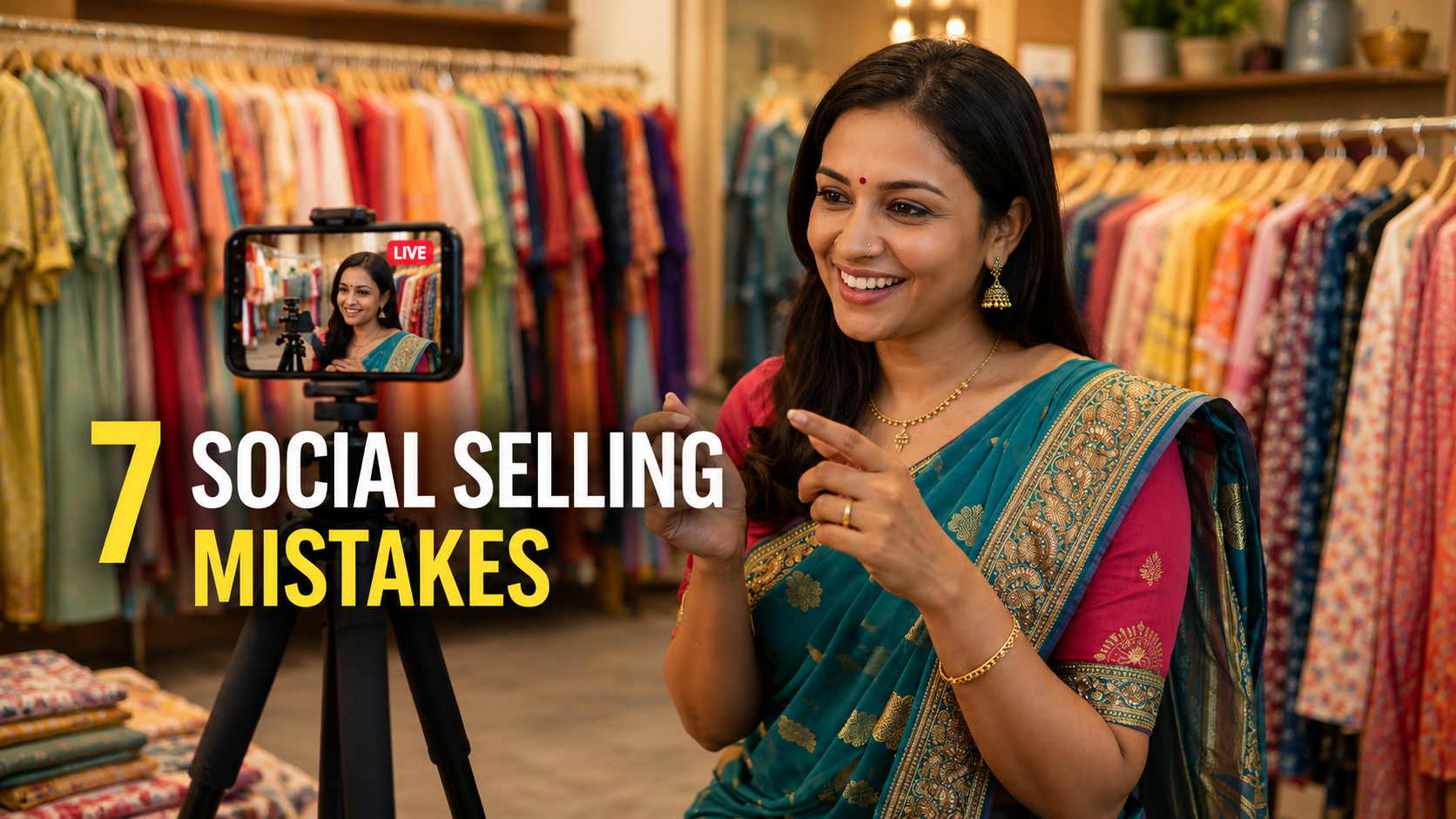
Social selling is the heartbeat of modern retail in India.
Whether you are selling handloom sarees from a boutique in Jaipur or trendy kurtis from a home setup in Delhi, the way you interact with your audience on social media determines your turnover. However, many sellers find themselves stuck with piled-up inventory despite spending hours on live streams.
If your stock isn't moving, you are likely making one of the common mistakes that plague independent sellers. Selling online is more than just turning on a camera; it requires a strategic approach to technology and customer engagement.
1. Treating Social Selling as a Numbers Game
Many sellers focus exclusively on getting the highest number of viewers possible. While reach is important, high numbers do not always translate to high sales. If you have 500 viewers but no one is buying, your strategy is failing.
Why is my viewership not leading to sales?
You may be attracting "window shoppers" rather than "intent buyers." When you focus only on volume, you often neglect the quality of the connection. Social selling is about building a community that trusts your brand enough to click "buy."
How to Fix it: Focus on engagement over views. Speak to your repeat customers by name during your sessions. Use Zoop Live to identify your "Zoop Stars": those loyal customers who transition from viewers to consistent buyers. By nurturing a smaller, more dedicated group, you create a sustainable
sales cycle.
2. Jumping straight into the Sales Pitch
The quickest way to lose a prospect is to start pitching before establishing a rapport. This feels like a hard sell and often alienates potential buyers who are looking for an experience, not just a transaction.
Why does a direct sales pitch push customers away?
In the Indian market, trust is the primary currency. Customers want to see the fabric, understand the fall of a saree, and know the person behind the brand. If you start every live session with "Price is 999, book now," you miss the opportunity to build that trust.
How to Fix it: Start your live sessions with a intro. Talk about the inspiration behind your collection. Show the details of the embroidery or the softness of the cotton. Use interactive elements like emojis and real-time Q&A to build excitement before you reveal the price.
3. Streaming on one Platform at a Time
This is one of the most common technical mistakes. Sellers often choose between Facebook, Instagram, or YouTube, thinking they can only manage one. By doing this, you are effectively ignoring two-thirds of your potential audience.
Losing money by streaming on only one Platform?
Your audience is fragmented. Some of your best customers might prefer Facebook, while younger buyers are on Instagram, and others discover you through YouTube search. If you are not everywhere at once, you are leaving money on the table.
How to Fix it: Use a live selling app that supports multi-streaming. With Zoop Live, you can stream to Facebook and YouTube at same time and even go live on Facebook and Instagram at the same time. This "triple-broadcast" feature allows you to reach a wider audience without any extra effort.
You speak to one camera, but your products are visible to thousands across all major social networks.
4. Stuck with manual cataloging and "DM for Price"
Nothing kills a sale faster than the "DM for price" instruction. Customers in 2026 want instant gratification. If they have to message you and wait three hours for a reply, they will go to a competitor who has a clear "Buy" button.
Why is manual cataloging hurting my business?
Manual work is prone to error. You might oversell a product you don't have in stock, or you might miss a booking in a flooded WhatsApp inbox. Furthermore, writing down every order by hand takes hours that you could spend sourcing new stock.
How to Fix it: Automate your inventory. Use the Zoop Live automated listing feature. As you showcase a blue kurti, you can hit "Add Product" on the app. The system confirms the item is added to your shop and tracks the units in real-time.
When a customer buys, the status updates to "Sold!" automatically. This professional approach builds immense trust. To get started, check out how to add your products to your Zoop store.
5. You are Broadcasting instead of Listening
Effective social selling is a two-way conversation. Many sellers treat their live stream like a TV commercial where they talk at the audience. This leads to missed insights about what the customers actually want.
How do I know if I am not listening enough?
Check your comment section. Are people asking about sizes you don't have? Are they asking for different colours? If you aren't acknowledging these questions in real-time, your viewers will feel ignored and leave.
How to fix it: Monitor the live chat constantly. Acknowledge comments even if they aren't direct buy requests. Use the feedback to decide what to show next. If three people ask to see the "red saree in the back," show it immediately. This level of responsiveness is what makes live commerce superior to
traditional e-commerce.
6. Not having a Professional Website
Relying solely on social media platforms is risky. Algorithms change, and accounts can be flagged. If you don't have a website, you don't "own" your customer data.
Why do I need a website if I sell on Instagram?
A website acts as your digital showroom. It provides a central place where customers can browse your full collection, read your terms of service, and make payments securely. It also makes your business
look more legitimate and professional.
How to Fix it: You don't need to hire an expensive developer. You can create a professional E-commerce website for free using Zoop Live. This site syncs with your live sessions, allowing users to buy products even after the stream has ended.
7. Forgetting the "Post-Live" Strategy
Most sellers think their job is done once they hit "End Stream." In reality, the 24 hours after a live session are the most critical for closing sales.
Why Am I missing sales after the stream ends?
Many customers watch the replay of your live session. If you don't have a system to capture these late orders, you are losing at least 30% of your potential revenue. Additionally, failing to follow up with people who expressed interest but didn't pay immediately is a wasted opportunity.
How to Fix it: Keep your cart open. Ensure your checkout link remains active in the description of the recorded video on Facebook and YouTube. Follow up with pending payments within 2 hours. For a detailed guide on maximising your results, read our post on what to do after your live show ends.
By fixing given mistakes, you move from being just another person with a smartphone to a professional live commerce brand.
Visit Zoop Live today to transform your social selling strategy.